Skip to content

Cutting the cost of a banquet menu can be achieved through careful planning and strategic decision-making without compromising the quality of the event. Here are several tips to help you reduce costs while still offering a satisfying experience for your guests:
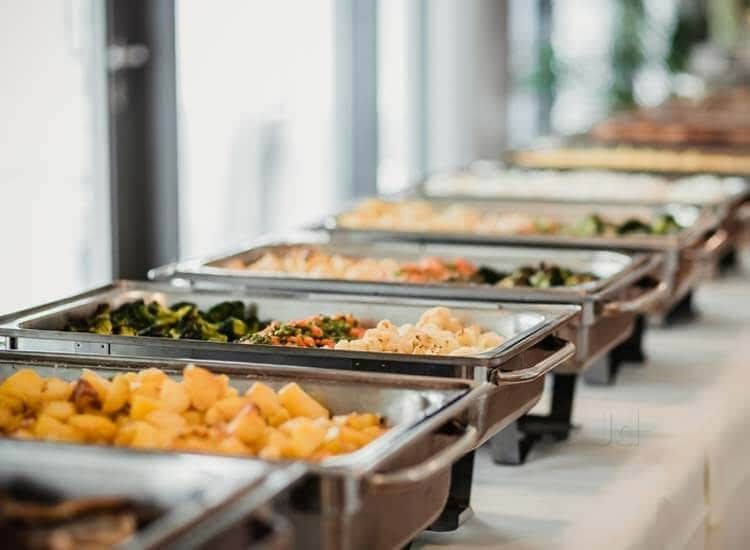
- Menu Selection: Focus on in-season and local ingredients, which tend to be more affordable. Choose dishes that require fewer expensive or exotic ingredients. Opt for vegetarian or vegan options, as these tend to be less costly than meat-based dishes. Consider offering a buffet-style or family-style meal instead of individually plated courses.
- Simplify Recipes: Select recipes that have fewer complex and expensive components. Avoid dishes with rare or hard-to-source ingredients. Choose recipes that require minimal preparation time and labor.
- Portion Control: Control portion sizes to minimize food waste and reduce costs. Work with your chef to find the right balance between portion size and guest satisfaction.
- Limited Menu Options: You can offer a limited menu with a few well-crafted dishes instead of an extensive menu with numerous options. This can help streamline kitchen operations and reduce the need for various ingredients.
- Smart Beverage Choices: Offer a limited selection of beverages to control costs.
- Negotiate with Suppliers: Build relationships with food suppliers and negotiate for bulk discounts or special rates for your event. Seek out deals on items that are commonly used across multiple dishes.
- Rentals and Décor: Opt for simple, elegant table settings and décor that don't require extravagant rentals. Consider reusable centerpieces or decorations that you can use for multiple events.
- Staffing: Efficiently manage staff levels to avoid overstaffing, which can increase labor costs. If feasible, hire temporary staff or utilize volunteers for certain tasks.
- DIY or Potluck Elements: Could you include guests in providing certain dishes or items depending on the event? This could include a dessert table where guests bring homemade treats.
- Avoid High-Cost Ingredients: Stay away from ingredients that are known to be costly, such as exotic seafood or luxury meats.
- Minimize Specialty Dietary Requirements: While it's important to accommodate dietary needs, more specialty dishes can be needed to save costs. Aim for dishes that can be adapted to suit various dietary requirements.
- Appropriate Serving Sizes: Balance the desire to impress guests with the need to manage costs by offering appropriately sized portions.
- Use Technology Wisely: You can use event management software for efficient planning and guest communication, so you don't need to print materials.
- Early Planning: Start planning early to take advantage of early bird deals and to have more time to research cost-effective options.
Remember, the key is to maintain the overall quality and experience for your guests while finding creative ways to cut unnecessary expenses.
Share it, Spread it
Facebook
Twitter
LinkedIn
Pinterest
WhatsApp
Telegram